Wax-up and mock-up: why I do them before treatment
Before changing a tooth, I want to see, and to show, how the result might look. A wax-up and a mock-up are the tools I use to do that.
On this page
What is a wax-up?
It is a model of the teeth on which the final shape is sculpted in wax or digitally, in design software. It is made from photographs, an impression or scan, and an analysis of the bite.
It is a planning tool. It shows me how much structure has to be added or removed, what proportions can be achieved and whether the bite allows the shape that is wanted.
What is a mock-up?
It is the transfer of the wax-up into the mouth. A temporary material is placed on the unprepared teeth, using a silicone key made on the wax-up, to give a provisional version of the final shape.
A mock-up is reversible, because the teeth have not been changed. It can be removed, and the teeth remain untouched.
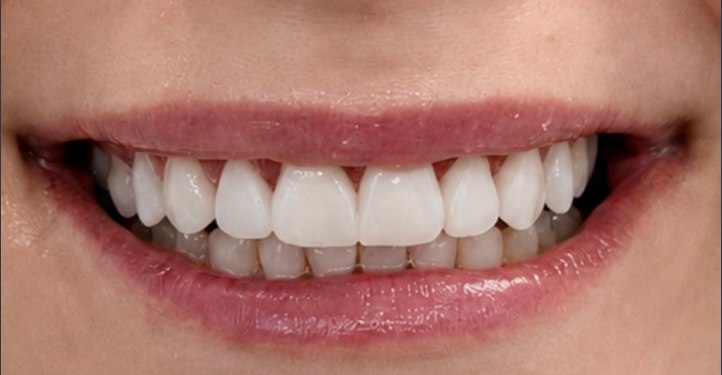
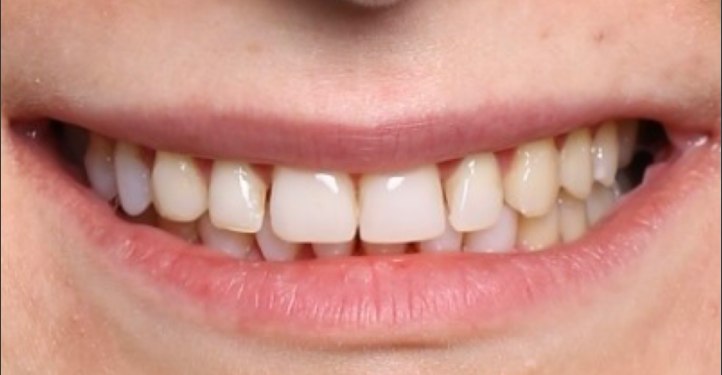 BeforeWith mock-up
What does a mock-up show, and what does it not show?
It shows volume, length, midline, proportions and how the smile suits the face. The patient can speak, smile and look in the mirror and in photographs.
It does not show the texture, translucency and gloss of the final ceramic. A mock-up is an approximation of shape, not an exact preview of colour and surface. I treat it as a guide, not a promise.
Why do I make it before preparation?
- I can decide how much enamel has to be removed, starting from the shape that is wanted. That way I keep as much as possible.
- The patient can react before a step that cannot be undone.
- I can check that the bite and speech suit the proposed shape.
- It becomes shared documentation: I, the patient and, where relevant, the colleagues involved all see the same plan.
Analogue or digital wax-up?
Both work when they are done carefully. A physical wax-up is sculpted by hand on a model, while a digital one is designed on a computer and can be 3D printed or milled. The quality of the diagnosis matters more than the method.
See how it fits into treatment on the page about dental veneers.
Sources
- Magne P, Belser U. Bonded Porcelain Restorations in the Anterior Dentition: A Biomimetic Approach. Quintessence, 2002.
The information on this page is general and educational. It does not replace a medical consultation, and a treatment recommendation can only be made after examining each patient. Results differ from one case to another.
Start with a consultation and a plan
Every treatment begins with a diagnosis: clinical examination, photographs, radiographs and, where relevant, an occlusal analysis. Only then do we discuss options.